Why Electric Vehicles don’t have a gearbox?
An Internal Combustion Engine consists of many crucial parts such as a crankshaft and some oscillating parts such as a piston, valves, connecting rods, and springs. The idle RPM (revolutions per minute) for a petrol engine is approximately 1000 RPM and that for a Diesel engine is approx 800 RPM.
When RPM increases, the oscillating parts create vibration which has to be balanced by using counterweights, in the form of a calculated and complicated design of a crankshaft.
But as the engine approaches a higher RPM, the following problems come to life:
1. Excessive wear and enormous heat generation due to friction of oscillating surfaces like the inner lining of the cylinder and the piston/piston rings.
2. Risk of engine failure due to excessive vibration and continuous output of maximum power.
3. At high RPMs, the springs of the valves are unable to cope up with the speed of valve opening and closing, which might lead to poor harmony between valves and the piston which even lead to a valve scooping the top surface of the piston and valve damage, eventually resulting in an engine failure.
This happens because the valves are opened by the lobes on the camshaft, which is connected to the crankshaft via a chain or a belt, which allows it to rotate at a speed proportional to the crankshaft. When speeds are high, the valve springs are unable to close the valve as quickly as compared to the speed of the rising piston.
4. Engine seizure, as high RPMs generate heat at a higher rate than it can be radiated via a radiator.
Due to the above shortcomings, the IC Engine is specified with a maximum limit of 12,000 RPM in the case of bikes, 8000RPM in Gasoline engines, and 6000 RPM in Diesel engines.
Moreover, IC Engines provide peak torque and peak power in a very narrow band of RPM, when compared to the full RPM range of the engine.
Hence, a gearbox is taken into consideration to extract optimum torque and power as demanded by the driving situation.
Conversely, an electric motor has none of the following problems.
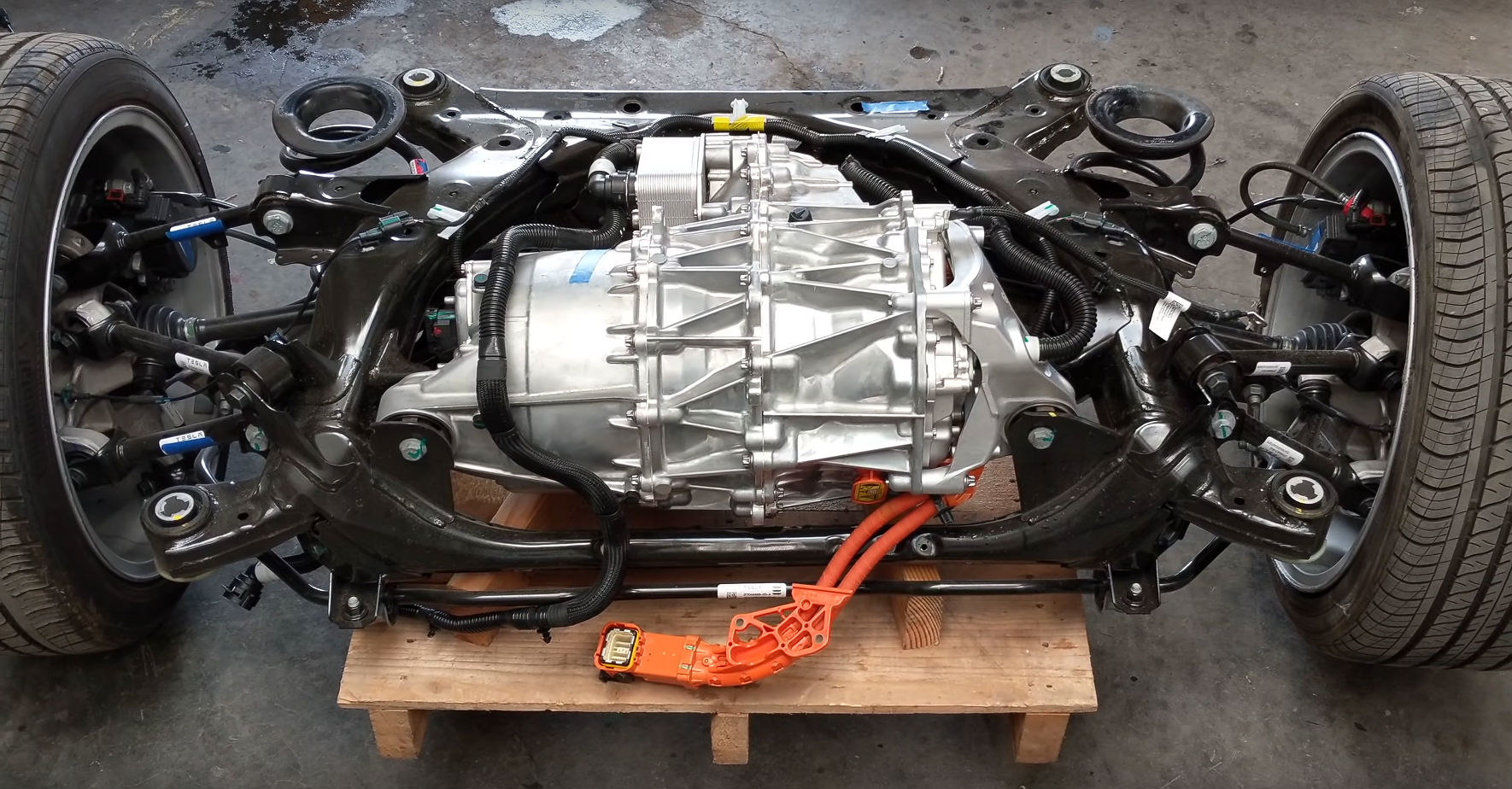
The electric engine consists of a solid shield, Stator, and a copper wounded axis called the rotor. There is no moving part in the motor other than the rotor, which can rotate easily up to 20,000 RPM.
Hence, when the motor is able to spin at such high speeds, varying gear ratios of a gearbox are not required to keep the RPMs in check, unlike in an IC Engine.
Moreover, in an Electric Vehicle, a motor is able to deliver the maximum torque throughout the complete range of the RPM band. So, Electric Vehicles do not need any gearbox to operate at the optimum torque and power output.
Lastly, I would like to add the in some cases, we might notice the use of a gearbox along with an Electrix vehicle but that is the case only in Formula racings or some really tricky situations. In all other situations, you don't really need one!
Watch this video for more understanding of parts and working of the motor of an Electric Vehicle:
Please visit my blog:
https://pranavlama8.blogspot.com/?m=1
Read my blog on Compact SUV: India’s favourite segment:
https://pranavlama8.blogspot.com/2021/02/compact-suv-indias-favourite-segment.html?m=1
Read my blog on NCAP: Towards a safer transport:
https://pranavlama8.blogspot.com/2021/02/ncap-towards-safer-transport.html
- Pranav Verma


Comments
Post a Comment